Why Kaivalyadhama Is the Foundation of Natural Breath
Breathwork has entered the mainstream. It is now used in sports, therapy, meditation, recovery, and performance training. More people are discovering that breathing is not only automatic. We can also observe it, influence it and train it.
Natural Breath Method does not begin with a newly invented technique. Its foundation is rooted in the pranayama tradition of Kaivalyadhama, an Indian yoga institute founded in 1924.
This matters because a breathing practice should not only tell us what to do. We should also understand where it came from, why it is taught in a certain way, and whether it is suitable for the person practicing it.
A tradition with visible roots
Pranayama is not one breathing exercise. It is a broad yogic discipline that begins with observing and regulating the breath. With careful practice, the breathing can gradually become more controlled, subtle and still.
The principles of pranayama appear in classical yoga texts. Patanjali discusses pranayama in the Yoga Sutras. Later texts, especially the Hatha Yoga Pradipika and the Gheranda Samhita, describe preparation, inhalation, exhalation, breath retention and specific techniques.
At Kaivalyadhama, these texts are studied alongside practical teaching. This allows students to trace the history of many practices instead of simply accepting that they appeared in a modern book, video or training course.
This does not mean that every instruction has remained unchanged. Texts differ, translations require interpretation and teaching develops over time. Natural Breath therefore does not claim absolute purity. It claims provenance. This means that we can show where the main ideas and practices came from.
Where tradition met science
Kaivalyadhama was founded by Swami Kuvalayananda to bring traditional yoga and modern science together. Yogic practices were studied to understand what happens in the body and mind during practice.
Science cannot prove every spiritual or philosophical teaching. However, it can ask important questions. What changes during a breathing practice? Who might benefit? What are its limitations? Could it be too demanding for some people?
This combination of traditional texts, practical teaching and scientific investigation is why Kaivalyadhama forms the foundation of Natural Breath.
Beginning with the person
Natural Breath does not claim to go deeper than pranayama. Instead, it begins earlier so that people can eventually practice more deeply.
Many people have never carefully observed their natural breathing. Some breathe mainly through the mouth or upper chest. Others use too much effort or find slow breathing uncomfortable. Stress and anxiety can also change the rhythm of the breath and create tension in the body.
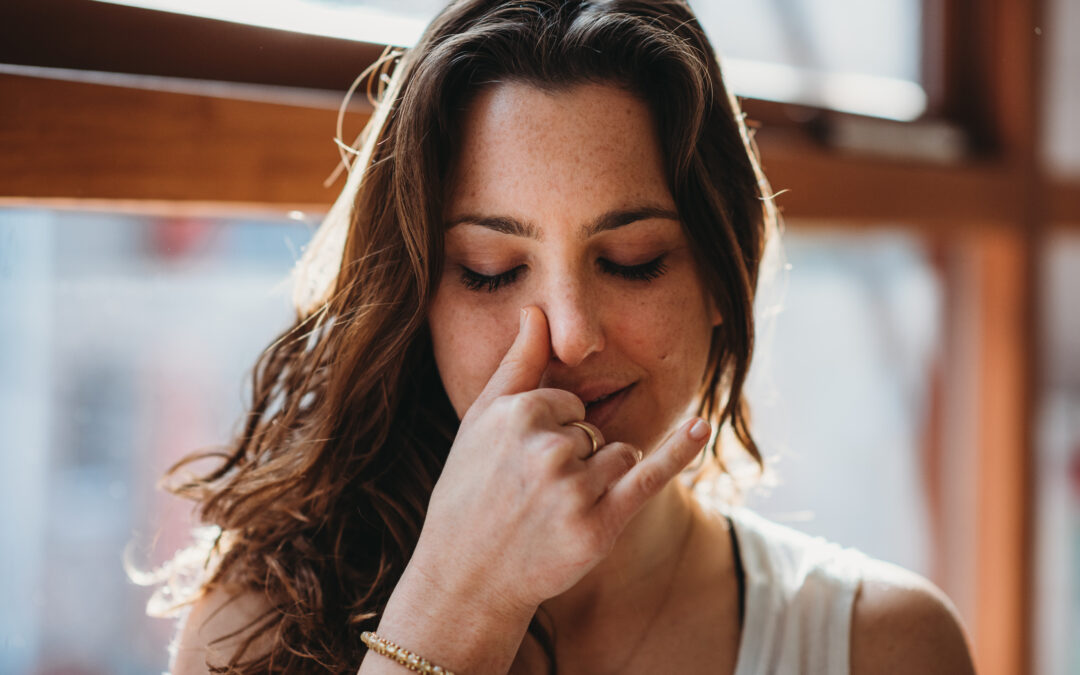
Natural Breath may therefore begin with posture, relaxation, nasal breathing, diaphragmatic movement, and simple breath awareness. We do not immediately force the breath into a fixed pattern. We first learn to notice what the breath is already telling us.
Different people need different practices
No single breathing technique is right for everyone. The breathing pattern that prepares an athlete for action is not necessarily the pattern that helps someone recover or fall asleep. What feels comfortable for an experienced practitioner may create strain in a beginner.
Natural Breath teaches progression rather than performance. Awareness comes before control. Stability comes before intensity. The practice is tailored to the individual rather than imposing the same method on everyone.
Ancient does not automatically mean safe. A practice becomes safer when it includes proper preparation, appropriate intensity, clear limitations, and respect for individual differences.
Natural Breath preserves the roots of pranayama while using modern knowledge about breathing, stress, recovery, and the nervous system. It is a bridge between an ancient tradition and the needs of people today.
The breath is ancient. The way we teach it must meet the needs of today’s human being.