A gentle 3-minute read| Written with your nervous system in mind
You might be wondering what actually happens to your body when you practice slow breathing. How does it affect your body, energy, or mind? Before you start, it’s important to understand the benefits of this practice.
Ten minutes may not sound like much. But when you deliberately slow your breathing- particularly toward roughly five to six comfortable breaths per minute- you begin changing the rhythm of several systems in your body at once. How many breaths per minute do you take now?
Before we uncover what happens to your body with a slow breathing practice, let’s look at the function of breathing in general. It’s essential to know that our breath is one of the few automatic functions you can consciously change, which is why it can become a doorway to your nervous system. Take a moment to observe your breathing now. Your body breathes in and out on its own, without you needing to take an active role. If you’re still in doubt, notice the next time when you are completely immersed in eating a delicious meal, reading a fascinating article, or talking to a dear friend- you are there, in the experience, and there is no need for you to think about breathing.
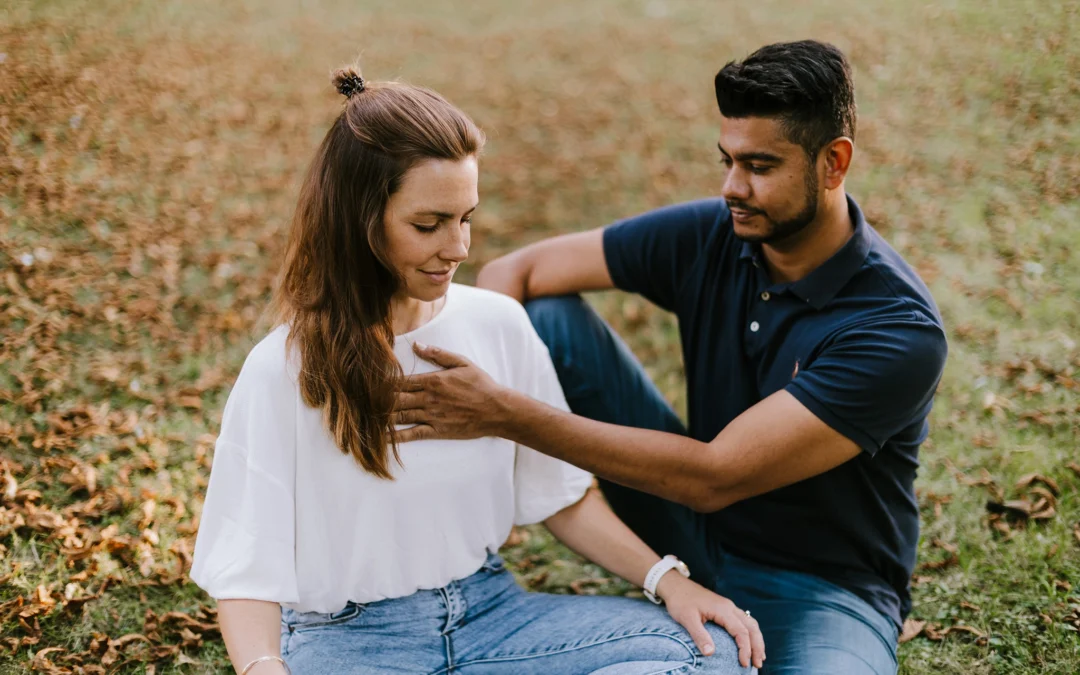
At the same time, you can consciously change your breath as you sit here reading this article. Take a moment to experience it. You can deepen your breath, make it flow faster, slow it down, or hold it for a couple of seconds. Try it out.
The fact that the breath flows without your control, and at the same time, you can change it whenever you want, proves that the breath sits at the intersection of the autonomic (ANS) and voluntary nervous systems. This gives you a practical way to influence physiological processes that are normally outside our direct control. Let’s take a deeper look.
Your heart and breath begin to synchronize
With slow breathing, especially around six breaths per minute, the natural rise and fall of heart rate with each breath becomes more pronounced. Heart rate typically increases slightly on the inhale and decreases on the exhale – a phenomenon known as respiratory sinus arrhythmia.
At slower respiratory frequencies, breathing also begins to synchronize more strongly with blood-pressure regulation. Research shows increased heart-rate variability and improved baroreflex sensitivity- the mechanism that helps your body continuously adjust heart rate and blood-vessel tone when blood pressure changes.
This does not simply mean that the sympathetic nervous system is “switched off.” A more accurate description is that slow breathing can help the autonomic system become better coordinated and more flexible.
Your heart rate and blood pressure may begin to fall
The effects can happen surprisingly quickly.
In one clinical study, breathing at approximately six breaths per minute for only five minutes resulted in reductions in heart rate and several measures of blood pressure in people with hypertension.
Another study using 15 minutes of slow breathing found increased heart-rate variability and baroreflex sensitivity alongside reductions in heart rate and systolic blood pressure.
The exact response varies from person to person, but the cardiovascular system can start responding within minutes.
Your breathing becomes more efficient
Slow breathing usually involves less frequent, more controlled breaths and greater diaphragmatic movement. This can improve the relationship between ventilation, circulation, and gas exchange.
Importantly, the benefit is not simply “getting more oxygen.” In a healthy person, oxygen saturation is normally already high. Breathing too much or too quickly can actually lower carbon dioxide excessively, which changes blood-vessel tone and can contribute to dizziness, tingling, or feelings of anxiety.
Gentle slow breathing can instead support a more stable balance between oxygen and carbon dioxide.
The body can begin to release unnecessary tension
When the brain no longer receives the same pattern of rapid, threat-associated breathing, the broader stress response can begin to soften.
This may be experienced physically as the jaw unclenching, shoulders lowering, the abdomen becoming softer, or less tension around the face and eyes. We should be careful not to claim that every individual muscle measurably relaxes within ten minutes, but brief paced-breathing sessions have been shown to reduce subjective tension and physiological arousal.
In one controlled study, just ten minutes of slower paced breathing produced greater reductions in self-reported tension and anxiety, together with reduced skin conductance- a physiological marker associated with arousal.
The mind can feel clearer
This is perhaps the first change people notice.
When breathing slows, attention becomes anchored to a predictable rhythm. At the same time, cardiovascular and autonomic activity becomes more organized. Rather than using energy to maintain a constant state of readiness, the body may move toward a state in which it becomes easier to observe, think, and respond rather than immediately react.
That is why, after ten minutes, people often describe feeling quieter, clearer, more present, or more spacious internally.
It is not because the brain has suddenly “shut down stress.” It is because breathing changes the physiological conditions in which the brain operates.
And this is only ten minutes
Ten minutes of slow breathing is not a cure, nor does it instantly regenerate cells or fundamentally rewire the nervous system.
But it can create a measurable physiological shift.
Your breathing rhythm changes.
Your heart rhythm changes with it.
Heart-rate variability can increase.
Blood-pressure regulation can become more responsive.
Heart rate may decrease.
Physical arousal and perceived tension can soften.
And with repeated practice, the important question becomes less:
“How do I calm myself down?”
and more:
“Can my body become better at returning to balance?”
That is one of the central ideas behind pranayama and slow-breathing practice: not forcing the body into relaxation, but gradually giving it another physiological pattern to return to.
Research: Russo et al., Breathe (2017), review of the physiological effects of slow breathing; Kuppusamy et al./slow-pranayama cardiovascular research; Larson et al., Frontiers in Physiology (2020); Clark & Hirschman (1990), paced breathing and anxiety.